

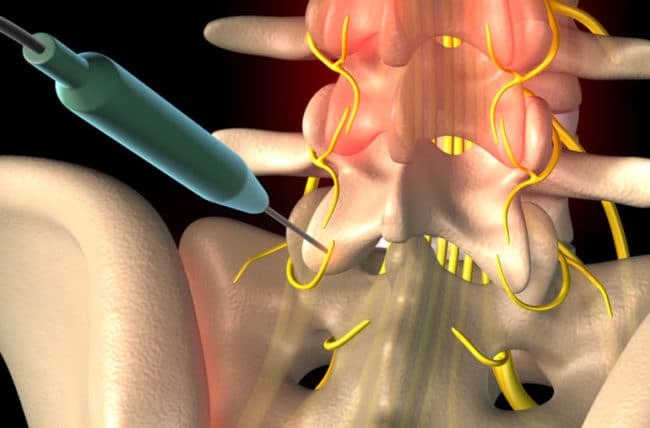
Q1: What is radiofrequency nerve ablation (RFA)?
A: RFA uses heat delivered through a needle to interrupt pain signals from the facet joints in your spine, providing relief for months at a time.
Q2: Who is RFA suitable for?
A: People with confirmed facet joint pain — usually identified by a successful diagnostic nerve block — are the best candidates.
Q3: How long does RFA pain relief last?
A: Most people get six to twelve months of meaningful relief. The nerve can regrow, but the procedure can be repeated.
Q4: Does RFA replace physiotherapy?
A: No. Physio is essential before and after RFA to build strength and reduce the chance of pain returning.
Q5: Are there risks with RFA?
A: Risks are low but include temporary soreness, bruising, and rare nerve complications. Always discuss with your pain specialist.
Radiofrequency Nerve Ablation for Low Back Pain:
Low back pain affects roughly 80 percent of Australians at some point in their lives. For most people, it settles with the right care, (read more here). But…

for a significant number — particularly those with chronic pain coming from the small facet joints of the spine — it can become a cycle of flare-ups, frustration, and searching for answers.
Radiofrequency nerve ablation (RFA) has emerged as a genuine option for this group. It’s not a magic bullet, but when used correctly and combined with physiotherapy, the evidence is genuinely encouraging. At Arana Hills Physiotherapy, we work alongside GPs and pain specialists to make sure our patients understand all their options.
What Is Radiofrequency Nerve Ablation — and How Does It Work?

RFA is a minimally invasive procedure performed by a pain specialist. Using image guidance (usually X-ray or fluoroscopy), a needle-sized probe is positioned next to the small nerves that carry pain signals from your facet joints in your back to your brain. Radiofrequency energy is then delivered through the probe, heating the nerve tissue and disrupting the pain signal.
The key thing to understand is that RFA doesn’t fix the underlying joint — the facet joint remains arthritic or irritated. What it does is turn down the volume on the pain being transmitted. Think of it like cutting the cable between the source and the speaker.
The procedure typically takes 30 to 60 minutes and is done under local anaesthetic with light sedation. Most people go home the same day.
Who Gets the Best Results from RFA for Low Back Pain?
Careful patient selection is the single most important factor in whether RFA works. The gold-standard pathway is a two-step process: first, a diagnostic medial branch nerve block (an injection to temporarily numb the nerve) is performed. If that injection relieves your
pain by at least 50 to 80 percent, it confirms the facet joints are the pain source. RFA is then performed on those same nerves.
Without this diagnostic step, the research shows much more variable results. Pain that comes from a disc, muscle, nerve root, or sacroiliac joint is unlikely to respond to RFA targeted at the facet nerves — even if those joints show changes on imaging.
What Does the Research Say About RFA Effectiveness?

The evidence base for RFA in carefully selected patients is solid. A 2020 Cochrane Review found moderate-quality evidence that RFA provides greater pain relief than sham procedures at three and six months for chronic facet joint pain. Multiple randomised controlled trials have found clinically meaningful reductions in pain and improvements in function.
A 2021 study in the journal Pain Medicine found that 60 to 70 percent of properly selected patients achieve at least 50 percent pain reduction following RFA — a threshold considered clinically significant. Average duration of relief was around nine to twelve months.
Importantly, the evidence is weaker for people who haven’t had a confirmatory nerve block first. This is why the assessment process matters just as much as the procedure itself.
RFA and Physiotherapy: A Powerful Combination
 Here’s where the evidence gets really interesting. RFA works best not as a standalone treatment, but as a bridge to rehabilitation. When you’re in significant pain, it’s hard to exercise effectively. RFA can reduce pain enough to make physiotherapy possible — and using that window well can change the long-term trajectory of your back pain.
At Arana Hills Physiotherapy, when patients return after RFA, we focus on building deep stabiliser strength, lumbar spine flexibility , improving hip mobility, and progressively loading the spine.
This isn’t just about getting strong — it’s about training the movement patterns that reduce abnormal load on the facet joints in the first place.
Research consistently shows that people who combine RFA with active rehabilitation have better long-term outcomes than those who use RFA alone. The pain-free window is an opportunity — use it.
How Many Times Can You Have RFA?
Because the nerve can regrow over time (a process called reinnervation), pain sometimes returns after twelve to eighteen months. The good news is that RFA can be repeated, and many people get similar relief with subsequent procedures. Each time, the nerve is again ablated, and the cycle resets.
That said, the goal shouldn’t be to keep repeating procedures indefinitely. The aim is to use each pain-free window to build enough strength and resilience that pain becomes less severe — or ideally, less frequent — even as the nerve regrows.
What Are the Risks of RFA?
RFA has a good safety profile when performed by an experienced practitioner. The most common side effects are temporary soreness at the injection site, some burning or hypersensitivity around the treated area, and occasionally a temporary flare-up of pain in the first two to three weeks. Serious complications — including infection or nerve damage — are rare.
RFA is not suitable for people with active infections, blood-clotting disorders, pregnancy, or those with pain from non-facet-joint sources. A thorough assessment — including physiotherapy evaluation — helps identify whether RFA is the right pathway for your specific situation.
Thanks for reading and if you want to se on of our tam you can book in here

Sources & Further Reading
• Cochrane Review: Radiofrequency denervation for chronic low back pain (2020)
• Pain Medicine: Outcomes of RFA for lumbar facet joint pain (2021)
• RACGP: Management of chronic low back pain in general practice
• Spine Journal: Evidence synthesis for facet joint interventions